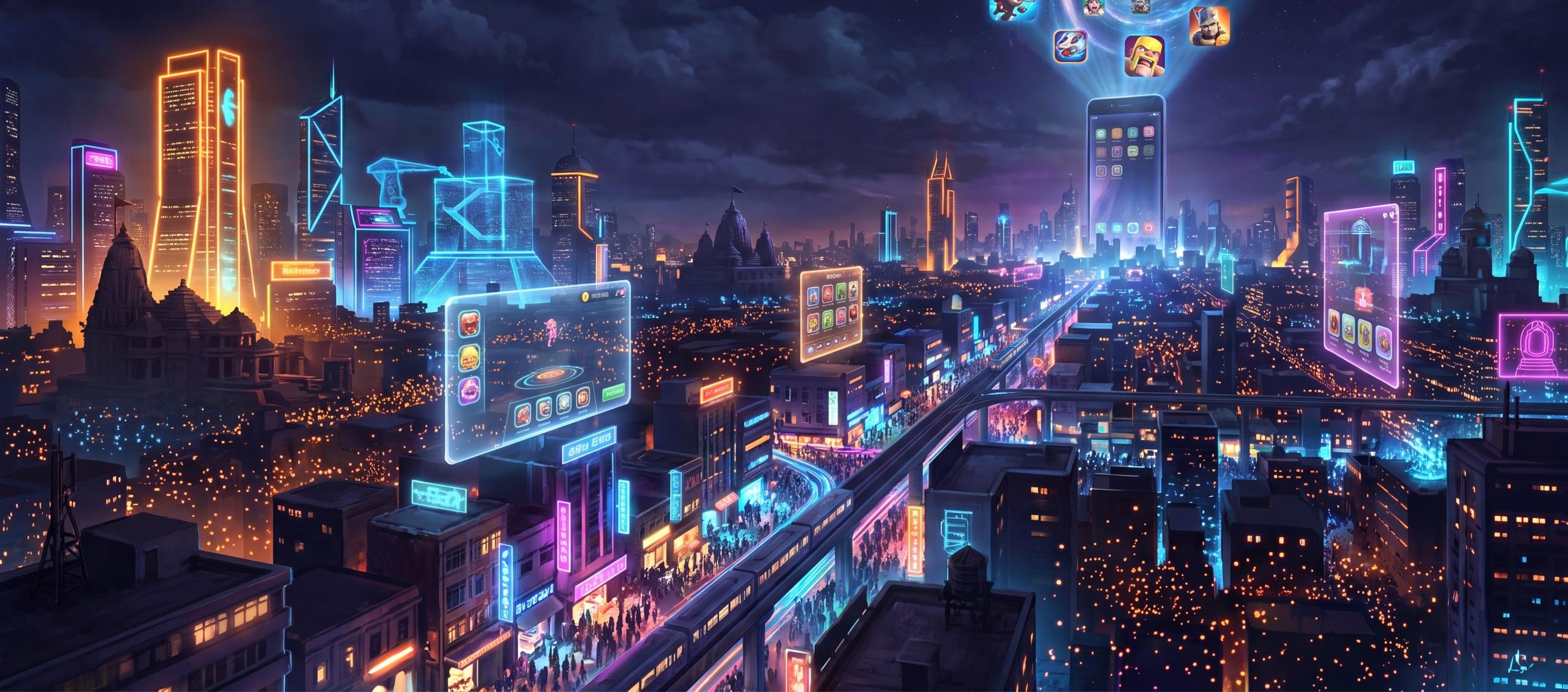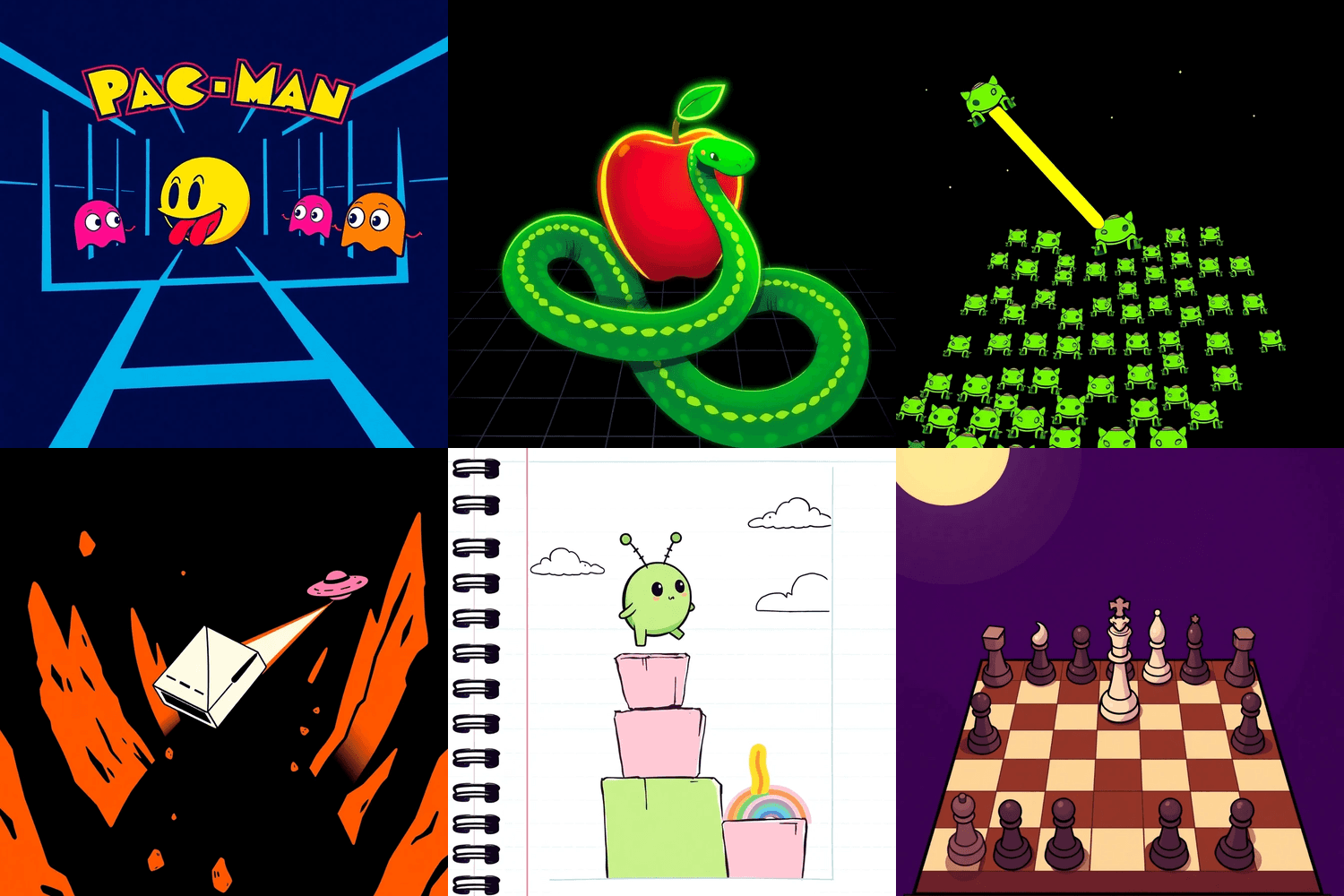
Blocks, then code, now words. A clear-eyed look at where AI game generation actually is in 2026 — what's real, what's hype, and why the creation primitive is changing.
Every era of user-created games has been defined by its creation primitive — the smallest unit a player manipulates to make something. Minecraft's primitive was the block. Roblox's was Lua code. The bet a lot of people are now making, us included, is that the next primitive is the word: you describe what you want, and the machine builds it.
Minecraft gave you blocks. Roblox gave you Lua. The next platform gives you words.
The creator economy is already massive
Before we talk about AI, it's worth remembering how big user-generated games already are. Roblox is a nearly 100% user-made platform, and it paid its creators roughly $1.5 billion in 2025 — its first year past the billion-dollar mark, up from $741 million just two years earlier. Fortnite hands island creators 40% of the net revenue their creations earn. The demand to make games — not just play them — is already one of the defining behaviors of a generation.
paid out to Roblox creators in 2025 — its first year past $1B, up from $741M in 2023 (Roblox)
AI doesn't create that demand — it removes the last barrier to it: skill. As Roblox's own CTO has put it, the goal is to let every user create, 'not just those comfortable with Roblox Studio,' using plain voice and text instead of code.
What's actually real in 2026
The hype is loud, so let's be precise about what's genuinely working versus what's a demo:
- —Assisted creation is real and shipping — Roblox's 'Cube' model turns a text prompt into a 3D object right inside its editor, and early tests of AI-generated content showed a 64% jump in average play time.
- —Text-to-playable-game is emerging — social apps like Astrocade (which reported roughly 5 million monthly users within a year of launch) and Rosebud AI turn a plain-language prompt into a small, actually-playable game, well past the party-trick stage for simple genres.
- —World models are the frontier — Google DeepMind's Genie 3 generates real-time, controllable, playable worlds from a text prompt, but only in limited research preview: lower-res, compute-heavy, and coherent for minutes, not hours.
The honest read: fully-generated AAA worlds from a sentence are not here, and won't be for years. But small, funny, shareable games from a sentence? That's crossed the line from impossible to real — and that's a bigger deal than it sounds. (It's worth being equally honest that AI adoption in game studios is contested: surveys range from around a third to nearly all of developers depending on who's asking, and Western player resistance to AI content is a real brake.)
Why 'small' is the point, not the limitation
It's tempting to judge AI game generation by whether it can make the next open-world epic. That misses where the actual behavior is. The internet already runs on small, disposable, shareable units of culture — a meme, a clip, a tweet. None of those are playable. The opportunity isn't to replace big games; it's to make a new medium out of the tiny ones: a game you can make in a sentence, play in thirty seconds, and send to the group chat.
Video killed radio. Playable kills video.
The bet we're making
This is exactly the thesis behind Riff — an AI platform for microgames where any meme, inside joke, or tweet becomes something you can actually play and share. We're not betting that AI will replace game studios. We're betting that when you collapse the cost of making a game to a single sentence, millions of people who never called themselves 'creators' will start making games — and that a feed of those tiny, personal, playable moments is a genuinely new kind of social platform.
The primitive is changing from code to language. Whoever builds the most fun on top of that shift gets to define the next decade of user-generated play.
Sources: Roblox shareholder letters (creator payouts, ~100% UGC); Roblox Newsroom (Cube model, +64% play-time); Epic Games (UEFN 40% creator payout, 2023); DeepMind (Genie 3, 2025); Astrocade (MAU, 2026); a16z 'The Next Generation Pixar' (Jonathan Lai). AI-adoption surveys range widely (~35%–90%) by sample; capabilities as of early 2026.
Dirtcube Interactive — Inspire. Create. Entertain.
See Our Products